
FORMATION
Ratio_Formationis_Ordinis_Frati_Minori_Cappuccini_EN
(cfr. The Constitutions of the Capuchin Friars Minor: Article III)
What is Formation for the consecrated life?
Formation for the consecrated life is a journey of discipleship guided by the Holy Spirit leading one progressively to assimilate the sentiments of Christ, the Son of the Father, and to shape one’s life according to His obedient, poor, and chaste life (Const. 23,1).
The goal of formation
Since formation tends towards the transformation of the whole person in Christ, it must be lifelong, as regards both human values and the evangelical and consecrated life. Therefore, formation must involve both the actions and intentions of the whole person in its various dimensions—human, cultural, spiritual, pastoral, and professional—taking every care to foster the harmonious integration of the various aspects. The purpose of formation is to make the life of the brothers and fraternities become ever more conformed to Christ, according to the Capuchin Franciscan spirit, taking into account the diversity of places and times (Const. 23,2-3)
Phases of Formation in the Order
Formation in our Order is implemented in two phases: initial and ongoing. Initial formation includes initiation into consecration according to our form of life, lasting until perpetual profession, and preparation for work and ministry, which may begin during initiation. Ongoing formation follows initial formation and is life-long (Const. 23,4).
Formation as the Work of the Holy Spirit
24
1All formation is first of all the work of the Holy Spirit, Who inwardly gives life both to those forming and those being formed.
2As it was for Francis, the Church, in its universal and local dimensions, is for us the living context and essential point of reference for any formation journey, since in it the Spirit is unceasingly at work.
3The Father reveals the secrets of the Kingdom of Heaven to little ones and, as Francis taught us, the Spirit rests equally on the simple and the poor. We therefore recognise closeness to the people and sharing in the life of the poor as particularly favourable conditions for our formation, and remain open to learning from them.
Our brotherhood, our own identity in the Church
4Our brotherhood, called to cultivate its own identity in the Church, has the duty and the right to ensure the formation of the brothers in conformity with our charism. Therefore, formation is a priority among the commitments of the Order and all its circumscriptions. ICF 7.1
5Active formation demands the cooperation of those being formed who are the principal authors of their own growth and the ones primarily responsible for it. CIC 652 §3
Brothers as formees and formators
6Throughout his life, every brother is at the same time in need of formation and imparting formation, because all of us always have something to learn and to teach. This principle shall be laid down as the programme for formation and put into practice in our life. 7To live together as lesser brothers is a primary part of our Franciscan vocation. Therefore, living as brothers is always and everywhere a basic requirement of the formation process.
8 In order that each of our fraternities, in particular those specifically designated for formation, may fulfil this primary function, they need the support and stimulus of the primary brotherhood, which is the province through which our belonging to the whole Order is established. Candidates shall develop an awareness that the Order constitutes a single family, and that all of us are bound to contribute responsibly to its well-being. CIC 651 §1-3; CIC 652 §4
Formation of Brothers
9While all the brothers have a formative role, it is necessary that some brothers be invested with greater responsibility. It is a particular task of the General Minister and his council to guarantee the authenticity of the formation of all the brothers of the Order. In each circumscription, this responsibility falls to the ministers and the guardians, who are the ordinary leaders and coordinators of the brothers’ formation process. There are, moreover, qualified formation personnel who undertake this particular duty in the name of the Order and the brotherhood.
25
1The Order shall have at its disposal the means of formation that meet the requirements of its own specific charism.
2Since particular attention must be given to the candidates during the period of initial formation, suitable educational structures shall be provided for each circumscription or groups of circumscriptions.
3The process of education requires, above all, a team of brothers in charge who follow consistent norms throughout the entire journey of formation.
4Let the ministers therefore take every care to provide qualified training for a sufficient number of those responsible for formation who assume and exercise their particular ministry in the name of the Order. For this reason, they are to have the support due to them from the whole brotherhood. VC 66
5Those responsible for formation shall be aware that the task assigned to them is of the greatest importance for the life of the Order and the Church, and devote themselves to it generously, all other duties taking second place.
6Formation secretariats are of great importance, both at the general level and in each circumscription, at the level of Conferences, and where areas collaborate. Therefore, care shall be taken that they be well provided for and made effective.
7The General Secretariat for Formation is the first structure of direct collaboration with the General Minister and his council in everything concerning the initial and ongoing formation of the brothers and the study centres of the Order. It is available to the different circumscriptions, to various areas that collaborate at an interprovincial level, and to the Conferences, offering them assistance and input for the promotion of all that pertains to formation.
8Likewise, each province or group of provinces shall have a Secretariat or Formation Council.
A plan for formation
9It is appropriate to define in a Ratio formationis or Formation Plan those principles that are valid everywhere in order to safeguard in formation the characteristics proper to our Order.
10Individual circumscriptions or groups of circumscriptions, depending on the situation in each region, shall have a formation plan of their own that outlines the goals, plans, and specific courses of the entire formation process.
FORMATION IN THE CUSTODY OF ST. FRANCIS OF ASSISI – CAMEROON
In the Custody, Formation occupies a very important place. This is because the custody has a good number of formative houses and many opportunities for the formation (initial and ongoing) of brothers.
FORMATIVE STAGES IN THE CUSTODY
ASPIRANCY
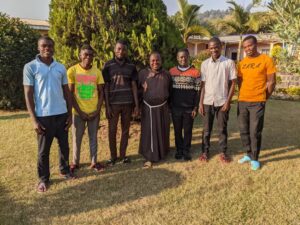
This is the period an individual desires to join the Order. In this stage, one continues with his regular life, while growing in his knowledge of, and experiences with the Order. It is a time of mutual discernment – the order with the candidate and the candidate with the Order. It is a period of not less than 6 months. In this stage of formation, the candidate’s relationship with God and God’s call, his personality and family background, his motivations etc are aspects to be observed. vocational animators welcome, accompany and discern the vocation of those who seek to live this way of life (Cfr. Custody’s Handbook, 2015, 28). The Aspirancy takes place in the different fraternities where brothers serve. Nevertheless, there is a master of aspirancy who coordinates this stage of formation.

POSTULANCY
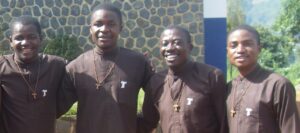
This is “the first period of initiation when one makes the choice to adopt our life. During this period, the postulant comes to know our life and makes a further and more careful discernment of his vocation. For its part, the fraternity comes to know the postulant better and ascertains the level of his human maturity, especially affective maturity, together with his ability to discern his life and the signs of the times according to the Gospel. The formation of the postulants is chiefly aimed at completing their catechesis in the faith, introducing them to the liturgical life, to the methods and experience of prayer, the study of our Franciscan heritage, to life in brotherhood, and to an initial experience of apostolic work” (Const. 30). This period lasts for 2 years. The Postulancy takes place in Shisong (Kumbo Diocese – North West Region)
What of life in the Postulancy in Shisong?
The life of a Postulant.
The life in the postulancy begins with rise at 5 o’clock AM. At 5:30 we assemble in the Chapel to pray the Lauds, meditation and Mass. After Mass, the postulant breaks his fast, then goes on to carry his morning chores (caring for the pigs, sheep, table birds, layers, cleaning of the house and other minor duties). At 8 am, everyone settles in his room for 25 minutes of spiritual reading, a spiritual exercise followed by some 2 hours instruction (8:30-10:30) on courses such as; Franciscanism, Human Formation, Catechesis, Liturgy, Church History, Sacred Scriptures, French and English languages.
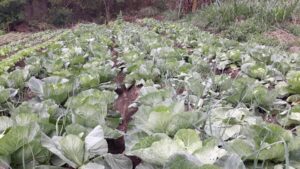
Saint Francis says any brother who doesn’t know how to work should learn how to work. Every brother changes after classes into his attire for manual work. This ranges from garden work, farm work, cleaning of the house, splitting of wood, laundry and ironing, which ends at midday. At 12:30 we gather in the refectory for lunch and a little time for silence is given to brothers. On Wednesdays and Saturdays, the postulants go for sports and have a wide variety of games to play; volleyball, basketball, football, etc. Postulants go on visits to the sick in the St. Elizabeth Catholic Hospital to every Sunday at 11am. Others do take up other apostolates with prayers groups in the parish like the Altar Servers, Cadets of Mary and Franciscan Youths . In the course of the week, afternoon activities resume at 2:45pm whereby we return to manual work till 5pm; a moment we profit to feed the animals, bring them to their fences. From this physical exercise, manual works, we have our rubdown and, preparations for Vespers, prayed at 6pm followed by meditation and the Rosary. Supper is taken at 7pm. And after Supper, there is the tradition to recreat as brothers: hence all postulants after supper, move on to the recreation room to play games, exchange with each other through story telling etc. followed by recreation for all postualnts in which they try to catch up among themselves on how the At 9pm, everyone retires for night prayer and then study. At 10:30 the postulant goes to have a “quiet night and a perfect end.”
NOVITIATE
It is “a period of intense initiation and more profound experience of the Capuchin Franciscan gospel life” (Const. 31). Some of the objectives of this stage of formation include: Introduction to our way of life in accordance with the gospels, a deepening of the Capuchin Franciscan life, charism and spirituality; a life of intense prayer (liturgical, communal, and private); a life of charity, brotherhood and work; and a deepening of the evangelical counsels of poverty, chastity and obedience. At the end of the novitiate, with the approval of the Order, the individual professes his first or temporary vows. This stage of formation covers a period of uninterrupted 12 months spent in the novitiate community in Sop (Kumbo Diocese – North West Region).
POST – NOVITIATE (FORMATION AND COMMUNITY LIVING)
This period begins with temporary profession and concludes with perpetual profession (3-6 years). During this period the brothers progress further in maturity and prepare themselves to make a definitive choice of the gospel life in our Order. According to each one’s gifts of nature and grace, the brothers are introduced to a more profound study of Sacred Scripture, spiritual theology, liturgy and the history and spirituality of the Order. They are to be initiated into the exercise of various forms of the apostolate and of work (cfr. Const. 32). In fact, the period of initial formation prepares the friar for solemn profession as the definitive option for the evangelical life. Ongoing spiritual, academic and theological preparation, for work and ministry, is undertaken at this point in a friar’s life in his fraternity. Through an ongoing process of reflection, the friar further deepens and develops his understanding and living of the Capuchin way of life.
Within this stage of formation, brothers engaged in various studies and apostolates (Philosophy – Benin, Theology – Bambui and other studies according to the gifts of the individual and according to the needs of the fraternity).

FORMATION FOR WORK AND MINISTRY
“Formation for work and ministry shall be planned in such a way that the brothers, in accordance with their talents and vocation, are sufficiently prepared for the duties and offices they will have to fulfil. Therefore some may learn skills and technical trades, while others engage in pastoral or technical studies, especially those of a sacred character” (Const., 37:5).



FORMATION AND COMMUNITY LIVING
“Saint Francis, ‘by divine inspiration’, initiated a form of gospel life which he called a brotherhood, and chose to model it on the life of Christ and His disciples. Therefore, we who profess this form of life truly constitute an Order of brothers” (Const. 88:6-7). Therefore, the Capuchin formation program is one aspect of our experience as “brothers in the community”. It is within the environment and atmosphere of our daily life that formation can best be accomplished. Since fraternity is essential to this way of life, it is fitting that our formation programs be integrated and enhanced by the actual situations and contingencies of daily living. Capuchin formation, and preparation for ministerial priesthood, is not only a series of professional programs but also a spiritual attitude and way of life. Finally, as contributing factors in our Capuchin Franciscan formation, of particular importance are the dynamisms of the Local Church, the families and the genuine values of the cultures and religious faith of the people.

